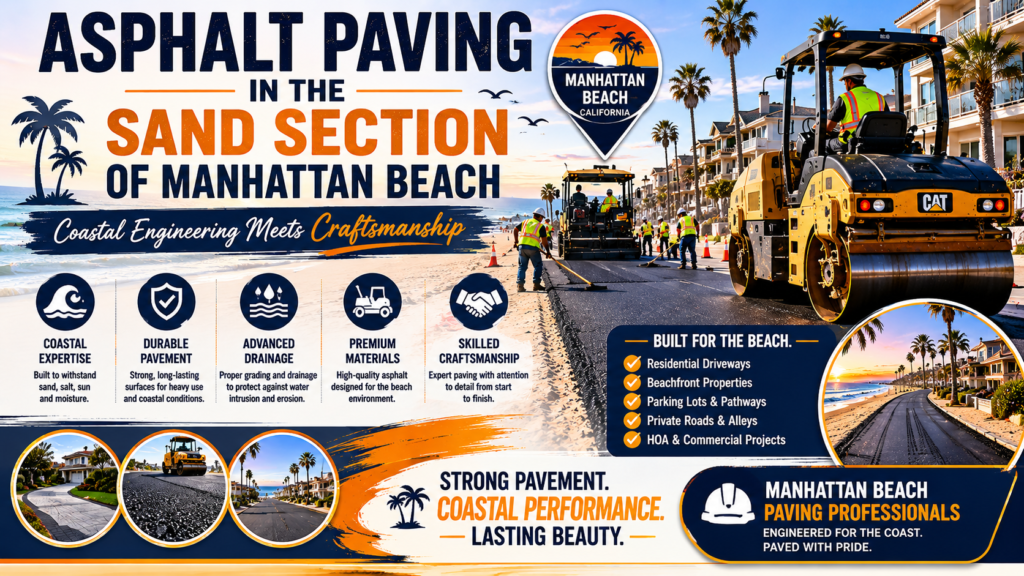
The Sand Section of Manhattan Beach is one of the most desirable neighborhoods on the California coast. Situated directly adjacent to the Pacific Ocean, it is defined by its proximity to the beach, its compact lot sizes, its high-end real estate, and its distinctive walkability. In this environment, paved surfaces driveways in particular serve not just a functional purpose but a significant aesthetic one. Understanding what Asphalt Contractor Sand Section involves in a setting like Sand Section helps property owners make informed decisions about quality, durability, and the right contractor for the job.
Paving Challenges Unique to the Sand Section
The Sand Section is literally surrounded by one of California’s most demanding environments for pavement. The combination of salt air from the ocean, sand infiltration, heavy foot traffic from beach-goers, and significant UV exposure from year-round sunshine creates conditions that accelerate asphalt wear faster than in inland areas.
The sandy soil composition in many parts of the neighborhood also creates sub-base challenges. Paving contractors working in the Sand Section need to account for soil instability and the potential for settlement or migration of the base layer over time. This requires careful engineering of the aggregate base depth and compaction to ensure the pavement stays level and structurally sound.
Driveways in a Dense Urban Beach Setting
In the Sand Section, driveways are often narrow, short, and situated in close proximity to structures, landscaping, and public sidewalks. The compact nature of the neighborhood means that paving projects require precision work in confined spaces. Equipment access may be limited, and projects often require extra coordination to avoid disrupting adjacent properties or public areas.
Despite these constraints, properly installed asphalt driveways in the Sand Section can achieve excellent longevity and visual appeal. The key is working with a contractor who understands urban beach paving one who has experience navigating permit requirements, working in tight spaces, and delivering a clean, finished product that respects the character of the neighborhood.
The Impact of Saltwater Environments on Asphalt
Exposure to saltwater air is a factor that affects both the asphalt binder and the aggregate base materials. Salt accelerates oxidation of the asphalt binder, causing it to harden and become brittle more quickly than in non-coastal areas. Once the binder loses its flexibility, surface cracking begins, opening pathways for moisture to infiltrate and further degrade the pavement structure.
Contractors with coastal paving experience address this through mix design choices selecting binders with higher elasticity ratings and aggregate materials that resist salt-induced degradation. Sealcoating schedules are also typically more aggressive in coastal communities, with applications every 18 to 24 months rather than every three years.
Permitting and Right-of-Way Considerations in Manhattan Beach
Manhattan Beach maintains active oversight of work affecting public sidewalks, driveways aprons, and any construction within the public right-of-way. Property owners planning paving work that touches the street-facing portion of the driveway, the apron, or any adjacent parkway may need to secure a permit from the City of Manhattan Beach Public Works Department.
Additionally, Manhattan Beach has specific aesthetic standards for the look and finish of improvements in coastal residential zones. An experienced local contractor will be familiar with these requirements and can help guide the permit process, reducing the risk of stop-work orders or required modifications after the fact.
Asphalt Versus Concrete for Sand Section Properties
Some property owners in the Sand Section consider concrete as an alternative to asphalt for driveways and courtyard surfaces. While concrete can offer certain advantages greater rigidity, a lighter appearance, and resistance to some forms of UV degradation it also carries significant drawbacks in this specific environment.
Concrete is less forgiving of ground movement, which is a meaningful consideration in sandy coastal soils. It is also more expensive to repair when damage occurs. Asphalt, by contrast, can be patched and resurfaced at relatively low cost, and its flexibility makes it more compatible with the soil conditions characteristic of the Sand Section. The choice ultimately depends on the property’s specific use, aesthetic preferences, and long-term maintenance tolerance.
Alley Paving and Access Improvements
Many properties in Manhattan Beach’s Sand Section back onto alleyways narrow service lanes that provide rear access for garages, trash pick-up, and utilities. Alley surfaces see heavy and varied use including garbage trucks, delivery vehicles, and daily resident traffic. When these surfaces deteriorate, they become not just an inconvenience but a genuine safety hazard.
Alley paving typically involves deeper base preparation than residential driveways to accommodate the weight and frequency of service vehicles. Drainage must also be carefully managed in alleys, where grading must direct water flow toward designated outlets without pooling near structures.
Maintaining Asphalt in a High-UV Coastal Zone
In the Sand Section, UV maintenance of asphalt should be treated as a non-negotiable aspect of property ownership. The coastal sunshine here is intense and year-round. Without sealcoating, asphalt surfaces will begin to show signs of oxidation graying, surface raveling, and hardening of the binder within three to five years of installation.
A structured maintenance calendar that includes annual inspection, crack treatment as needed, and sealcoating every 18 to 24 months will significantly extend pavement life and maintain the polished appearance that property owners in this premium neighborhood expect.
Choosing the Right Contractor for Sand Section Work
In a high-end neighborhood like the Sand Section of Manhattan Beach, the quality of your paving contractor reflects directly on the property. Look for contractors who have specific experience with coastal paving projects, verifiable references in Manhattan Beach or neighboring South Bay communities, and familiarity with both City permit requirements and the engineering demands of sandy coastal sub-grades.
A contractor who can demonstrate this combination of local knowledge and technical skill is far more likely to produce a result that looks exceptional, performs reliably, and justifies the investment that Sand Section property owners consistently make in their homes.
Conclusion
Asphalt paving in the Sand Section of Manhattan Beach is a specialized endeavor that requires respect for the coastal environment, precision workmanship in dense urban conditions, and a thorough understanding of local regulatory requirements. Property owners who approach paving projects with this awareness and who select contractors with genuine coastal expertise will enjoy surfaces that not only perform well over time but that complement the beauty and character of one of California’s most iconic beachside neighborhoods.