Long waiting lines are the number one cause of customer frustration. Whether in a bank, hospital, government office, or retail store, nobody enjoys standing in unstructured queues. A professional Queue Management System transforms chaotic waiting into an organized, efficient, and even pleasant experience by using digital ticketing, display screens, audio announcements, and mobile notifications to guide customers seamlessly from arrival to service.
In Saudi Arabia, where service excellence is a cornerstone of Vision 2030, queue management systems have become essential tools for organizations seeking to enhance customer satisfaction, optimize operations, and support digital transformation initiatives. This comprehensive guide explores the market landscape, key implementations, and why The NextGen Technologies is the top provider in the Kingdom.
Queue Management System: Market Overview and Core Components
The Queue Management System market in Saudi Arabia is gaining significant prominence, driven by the need to optimize customer service and reduce wait times across multiple sectors. According to market research, “Queue management systems offer tools for appointment scheduling, digital queuing, and waiting time management. The growth is fueled by the need to improve customer satisfaction, reduce waiting times, and streamline service operations in sectors like healthcare and government”.
Core Components of a Modern Queue Management System
A comprehensive queue management solution integrates several key technologies that work together to create a frictionless customer journey:
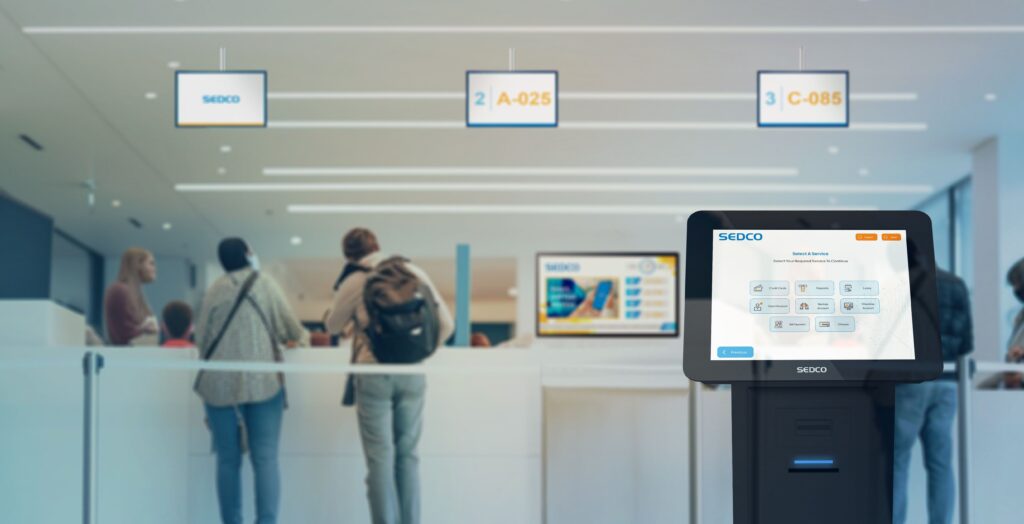
Self-Service Ticketing Kiosks: Touch-screen or button-based kiosks enable easy customer check-in without staff assistance. Customers can select their service type, take a ticket, and join the queue automatically. These kiosks dramatically reduce front-desk workload and improve efficiency while providing a professional first impression.
Digital Signage Displays: High-visibility LED and LCD screens show real-time queue status, ticket numbers, counter assignments, and estimated wait times. Customers can see exactly where they stand, reducing anxiety and improving satisfaction.
Audio Announcement Systems: Clear voice announcements call customers to specific service counters, ensuring no one misses their turn even in busy environments.
Staff Counter Units: Service staff can call the next customer, skip tickets, redirect customers, or send customers to specialized counters. All actions are logged for performance tracking and staff accountability.
Central Management Dashboard: Managers gain real-time visibility into queue status across single or multiple branches, enabling data-driven decisions about staffing and resource allocation.
Mobile Integration and Notifications: Advanced systems allow customers to join queues remotely via mobile apps. Customers receive real-time alerts via SMS or app notifications when their turn is approaching, allowing them to wait comfortably elsewhere.
Footfall Counter and Analytics: The system tracks how many people enter, when they come, and how long they wait. This information helps businesses plan staffing during busy hours and prepare in advance to reduce waiting times.
Key Benefits of Queue Management Systems
According to market analysis, organizations implementing professional queue management systems typically achieve impressive results: reduced wait times, higher customer satisfaction rates, more customers served daily, and significant improvement in staff efficiency.
Key benefits include:
- Reduced Wait Times: Customers wait less in physical lines, leading to increased satisfaction
- Improved Resource Allocation: Identify areas needing more attention and assign staff efficiently
- Enhanced Customer Experience: Digital displays and app notifications keep customers informed of their position
- Better Decision-Making: Data gathered by the system helps businesses optimize operations
Queue Management System in Riyadh: The Capital’s Digital Transformation Hub
Riyadh, the capital and commercial heart of Saudi Arabia, is home to thousands of businesses and government entities serving millions of customers daily. A Queue Management System in Riyadh must address the unique characteristics of the local market: high customer volumes, extreme weather conditions, and the expectation for bilingual support.
Landmark Government Initiative: The Ministry of Investment’s Queue Management Implementation
A landmark queue management project in Riyadh was implemented by the Ministry of Investment of Saudi Arabia (MISA) . The Ministry adopted SEDCO’s Queue Management Solution across seven offices, operating at one hundred and two counters across the kingdom.
The solution includes smart queuing technologies such as mobile booking, digital signage, customer identification, advanced Business Intelligence (BI), and mobile customer feedback.
Key features of the MISA implementation include:
- Mobile Booking: Citizens can schedule appointments in advance via the mobile app, allowing them to get served directly without waiting in queue. They also receive in-app notifications when their turn is approaching
- Digital Signage: Walk-in customers can issue queue tickets from kiosks and check their queue status on digital screens, which also display government services
- Customer Feedback Integration: Citizens can express their satisfaction level through the mobile app, allowing the ministry to gather valuable opinions, analyze feedback, and generate reports to enhance service delivery
- Advanced Business Intelligence: Live customizable monitoring dashboards and rich reports lead to enhanced efficiency, better resource allocation, and superior services
Nidal Abu Markhieh, Regional Sales Manager at SEDCO, stated: “We are excited to be part of the Ministry of Investment’s journey of digitizing the citizens experience; our advanced Business Intelligence tool embedded within the system offers live customizable monitoring dashboards and rich reports, leading to enhanced efficiency, better allocation of resources, and superior services. This step is a milestone for the ministry towards re-inventing the citizens’ experience”.
The Ministry of Investment ensures a superior citizen experience by monitoring office performance in real time, analyzing feedback, and generating insightful reports. Inefficiencies are identified through data-driven insights, creating a citizen-centric culture within government offices.
Strategic Partnerships Strengthening the Market
The queue management market in Riyadh has been strengthened by strategic global partnerships:
Qmatic, a global market leader in queue management founded in 1981, has expanded its presence in Saudi Arabia through a partnership with CONNECTIV. With operations in over 120 countries and a network of more than 130 certified resellers, Qmatic’s systems facilitate over 2 billion customer journeys annually across government offices, hospitals, banks, and retail branches.
David Larsson, CEO of Qmatic, stated: “We are excited to welcome CONNECTIV as a Premier Solution Partner. Their strong presence and deep market understanding in the UAE and Saudi Arabia make them an ideal partner as we continue to expand and deliver value to customers across the region”.
Joe Rabah, CEO of CONNECTIV, added: “Partnering with Qmatic represents a pivotal milestone in our mission to redefine customer experience across the Middle East. This collaboration is more than just a partnership; it is a strategic alignment that empowers us to deliver unprecedented operational efficiency and digital innovation”.
Similarly, Qwaiting has partnered with TAQ Consultants, headquartered in Riyadh, to serve the Saudi market across banking, healthcare, government, retail, and telecommunications sectors.
Rohit Garg, CEO of Qwaiting, noted: “The Kingdom represents one of the most important markets for customer experience innovation. TAQ Consultants’ local knowledge and dedication to excellence make them the perfect partner to help us serve this market. Together, we’ll help Saudi organizations transform their customer journeys, reduce wait times, and deliver seamless, digital-first experiences”.
FAMA Technologies has also partnered with QueueBee Solution to bring cutting-edge queue management solutions to the KSA region, targeting sectors from government offices to retail, healthcare, and banking. Key features of the solution include:
- Real-time queue analytics
- Smart token systems
- Touchless and mobile integrations
- Scalability for any industry
Riyadh-Specific Requirements
For businesses in Riyadh, queue management systems must offer:
- Bilingual Support: Full Arabic and English language interfaces
- Mobile App Integration: Online appointment booking and remote queuing
- Digital Signage: Displaying queue status and estimated wait times
- Footfall Analytics: Data on peak hours and service efficiency
- Customer Feedback Integration: Real-time satisfaction measurement
Queue Management System in Saudi Arabia: National Adoption and Impact
The demand for professional Queue Management Systems in Saudi Arabia is growing rapidly across multiple sectors, driven by Vision 2030 and the need for digital transformation. The Saudi government has actively pushed for digital transformation across all public-facing entities, and queue management is a key component of this initiative.
Key Market Drivers
Healthcare Sector Transformation: Hospitals and clinics across the Kingdom are implementing queue management systems to manage outpatient department queues, pharmacy counters, and diagnostic labs. These systems reduce overcrowding, minimize infection risks, and improve patient satisfaction. The COVID-19 pandemic emphasized the importance of efficient queue management in healthcare settings.
The National Water Company (NWC) implemented SEDCO’s digital branch transformation solutions, including virtual queuing, queue management system, digital signage, and customer feedback system, in 34 of its branches across the kingdom, in a landmark move to ensure social distancing and better serve customers during and after the COVID-19 pandemic.
SEDCO continues to drive the digital transformation of outpatient visits across leading hospitals in Saudi Arabia, such as Dr. Sulaiman Al Habib, Dallah Health, and Mouwasat Hospital, as well as across the wider region. The company empowers healthcare providers to deliver smarter, AI-powered, HIS-integrated, and truly patient-centric care experiences.
Banking and Financial Services: Major banks across Saudi Arabia use digital queue systems to control customer flow for different services, including account opening, deposits, and consultations. The system directs customers to the right counter, and staff do not waste energy managing crowds.
Government Service Centers: Passport offices, municipal service centers, and other public-facing departments handle large daily crowds. The MISA implementation across 102 counters demonstrates the scale of government adoption.
Retail and Shopping Malls: Retail outlets can control the number of customers entering premises, especially during peak hours. The COVID-19 pandemic emphasized the importance of efficient queue management in various settings, including healthcare, retail, and government offices in Saudi Arabia.
COVID-19 Impact and Acceleration
The pandemic had a positive impact on the virtual queue management system market in Saudi Arabia. The National Water Company’s implementation of SEDCO solutions across 34 branches is a prime example.
Gulf Bank also upgraded its queue management system with SEDCO virtual queuing solutions as part of its digital transformation goal to offer a better and safer client experience during the COVID-19 epidemic.
Key Players in the Market
In Saudi Arabia, the queue management system market is driven by several companies offering solutions to streamline customer queues and enhance the overall service experience. Key players include QueuePro Arabia, Q-Master Solutions, and LineFlow Middle East.
International providers with strong regional presence include Qmatic, SEDCO, and Qwaiting, all of which have established strategic partnerships in the Kingdom.
Market Growth Projections
The Saudi Arabia Queue Management System market is witnessing substantial growth as businesses focus on providing efficient and organized customer service. The MEA virtual queue management system market, which includes Saudi Arabia, is expected to grow at a CAGR of 5.4% from 2021 to 2028.
The rising adoption of cloud technology is transforming work patterns across diverse industry verticals by augmenting security, IT, and DevOps. Real-time feedback from customers, improved communication, regular data backup, high security, and comparatively low operations costs are among the benefits of cloud-based virtual queue management solutions.
The NextGen Technologies: Your Top Queue Management Partner in Saudi Arabia
When it comes to designing, installing, and supporting professional queue management systems in Saudi Arabia, one company leads the market: The NextGen Technologies. As the top provider of queue management solutions across Riyadh, Jeddah, Dammam, and beyond, The NextGen Technologies combines deep local expertise with global technology standards.
Why Choose The NextGen Technologies
Comprehensive Solutions: Their queue management systems include self-service ticketing kiosks with bilingual Arabic-English interfaces, digital customer displays showing real-time queue status, audio announcement systems, staff counter units with performance tracking, central management dashboard accessible from anywhere, mobile app integration for remote queuing, real-time analytics for continuous operational improvement, and integrated customer feedback systems.
Local Market Understanding: The NextGen Technologies has deep knowledge of Saudi customer behaviors, regulatory requirements, and operational challenges across different sectors—from healthcare to banking to government services. This ensures solutions are tailored to the Kingdom’s unique environment.
Proven Government Experience: The company understands the specific requirements for public sector digital transformation projects, having successfully implemented solutions for high-volume environments.
Seamless Integration: Their queue management solutions connect flawlessly with existing CRM systems, appointment systems, and mobile applications. The systems support integration with online web appointment modules and custom mobile apps for added customer convenience.
Comprehensive Support and Training: The NextGen Technologies provides 24/7 technical assistance, regular system health checks, firmware updates, hardware repairs, and dedicated account management. Staff training ensures your team leverages all features effectively, and fast response times minimize downtime.
Alignment with Vision 2030: By implementing smart queue management solutions, organizations align directly with Saudi Arabia’s digital transformation goals under Vision 2030, contributing to the Kingdom’s push for smart city development and enhanced customer experiences.
Industries Served
The NextGen Technologies serves a wide range of industries across Saudi Arabia:
- Banks and Financial Institutions: Counter queue management, priority customer handling, and appointment integration
- Hospitals and Clinics: OPD management, pharmacy queues, lab test lines, and admission processing
- Government Service Centers: Passport offices, municipal service centers, and other public-facing departments
- Telecom Customer Service Centers: Retail store queue management and customer flow optimization
- Retail and Shopping Malls: Checkout queuing and customer service desk management
- Corporate Offices: Visitor management and service desk queuing
Don’t let disorganized queues damage your reputation and drive customers away. Partner with The NextGen Technologies to transform your customer waiting experience. Visit their website at thenextgentechnologies.com to schedule a consultation, request a quote, or speak with a queue management specialist.
Conclusion
Long waits drive customers away and put pressure on staff. A professional Queue Management System organizes customer flow, reduces frustration, and provides valuable operational data.
In the capital, a Queue Management System in Riyadh must handle high volumes and bilingual needs. The Ministry of Investment’s implementation across 102 counters nationwide demonstrates how smart queuing technologies—including mobile booking, digital signage, advanced BI, and mobile customer feedback—can transform citizen experience. Strategic partnerships between global leaders like Qmatic and local experts like CONNECTIV, as well as Qwaiting with TAQ Consultants, are strengthening market capabilities across the Kingdom.
Across the nation, the Queue Management System in Saudi Arabia market is growing significantly, especially in healthcare, government, and retail sectors. From SEDCO’s implementations across leading hospitals to the National Water Company’s digital branch transformation across 34 branches and FAMA Technologies’ partnership with QueueBee, the adoption of digital queue solutions is accelerating under Vision 2030.
The NextGen Technologies stands as the top company in the Kingdom, delivering end-to-end queue management solutions that are robust, intelligent, and tailored to Saudi businesses and government entities. Their comprehensive solutions include bilingual support, mobile integration, real-time analytics, and 24/7 technical support.
Do not let disorganized queues damage your reputation. Visit thenextgentechnologies.com today and transform your customer waiting experience.
Frequently Asked Questions (FAQs)
1. What is a queue management system and how does it work?
A queue management system is a digital solution that organizes customer flow using ticketing kiosks, display screens, audio announcements, and staff counter units. Customers take a ticket (or join via mobile app), see their position on displays, and are called to a specific counter when their turn arrives. The system can also send SMS or app notifications to alert customers when their turn is approaching, allowing them to wait remotely.
2. What major queue management implementations have taken place in Saudi Arabia?
The Ministry of Investment of Saudi Arabia (MISA) has implemented a queue management solution across seven offices operating at 102 counters nationwide, featuring mobile booking, digital signage, advanced Business Intelligence, and mobile customer feedback. The National Water Company implemented SEDCO’s solutions across 34 branches. Additionally, strategic partnerships have been formed including Qmatic with CONNECTIV and Qwaiting with TAQ Consultants.
3. What industries benefit from queue management systems in Saudi Arabia?
Any customer-facing organization benefits. Major adopters include hospitals and clinics (OPD management, pharmacy queues), banks and financial institutions, government service centers (passport offices, municipal services), telecom customer service centers, retail stores and shopping malls, and corporate offices. The market is driven by the need to improve customer satisfaction and reduce waiting times in healthcare and government sectors.
4. Do queue management systems support the Arabic language?
Yes. Leading queue management systems offer full bilingual support for both Arabic and English languages, including ticket text, display screens, audio announcements, and staff interfaces. The MISA implementation, for example, was designed with bilingual support to serve all citizens.
5. Does The NextGen Technologies offer ongoing maintenance and support?
Yes. The NextGen Technologies provides comprehensive maintenance packages including regular system health checks, software updates, hardware repairs, and 24/7 technical support. Their fast response times and local presence ensure any issues are resolved quickly, minimizing downtime for your operations. This aligns with the partnerships seen in the market where local expertise is combined with global technology standards.